Westerly Sun Column | These Authors Left Their Mark on the Punctuation Debate
September 22, 2026
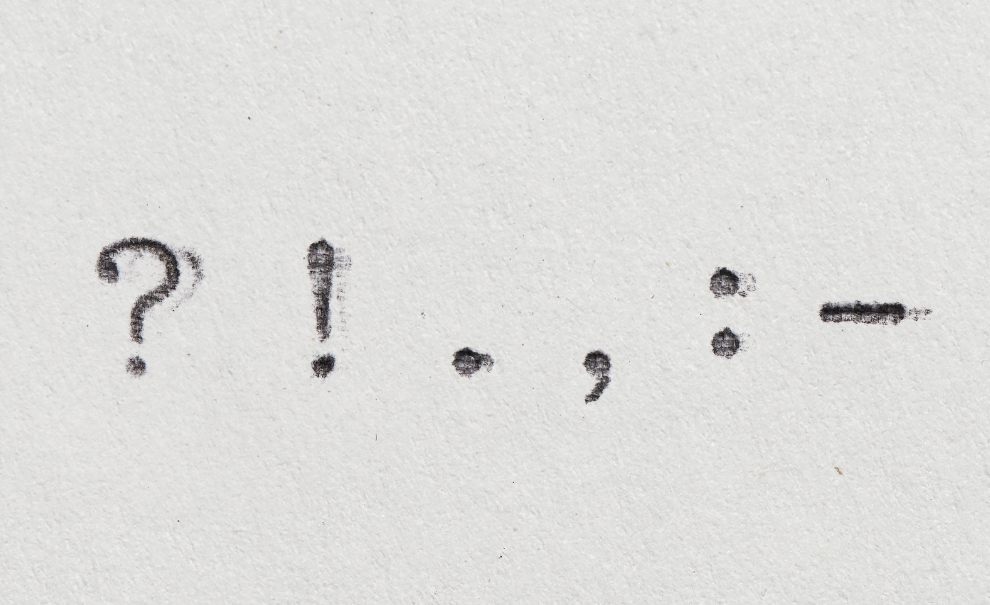
Punctuation is powerful. The inclusion of one tiny mark in a sentence can completely change the meaning. One too many exclamation points in an email can quickly make you appear deranged. I’ve seen marriages end over the Oxford comma. OK, that last one isn’t true, however I did once have a dream that my brother told me I use too many commas in my writing, and I’m still a bit peeved at him. At first glance, this seems like a niche subject, but people have strong feelings about punctuation, which is clear from the number of books on the subject we have in the library.
“Eats Shoots and Leaves” by Lynne Truss is one of the more well-known punctuation-centered books. After coming out to great success in the UK, the book was published in the US in 2004 and spent weeks atop the New York Times Bestseller list. In it, Truss explores the rules of common punctuation marks, and offers some of the history behind them. Her style of writing is reminiscent of Bill Bryson – witty, engaging, and accessible to the masses – which has undoubtedly had an impact on the book’s success. “Have You Eaten Grandma?” by Gyles Brandreth has similar vibes, providing simple and often funny examples of how to use various punctuation marks. I particularly enjoyed his chapter on hyphens, in which he compared the sentences: “Tim Cruise is a little-known artist” and “Tom Cruise is a little known actor.”
Perhaps my favorite book on punctuation (yes, I have a favorite book on punctuation, and you soon will too) is “Shady Characters: The Secret Life of Punctuation, Symbols, & Other Typographical Marks” by Keith Houston. Rather than instructing the reader on the proper use of punctuation, Houston walks the audience through the history of the written word, which dates back more than 2,000 years. It’s a captivating book, beautifully illustrated and typeset, that is meticulously researched and full of great trivia. I was pleased to learn, for instance, that the earliest version of punctuation is attributed to the librarian Aristophanes of Byzantium, who was head of the Library of Alexandria.
Of course, punctuation has evolved since Aristophanes’s day, and continues to do so. In “Because Internet: Understanding the New Rules of Language,” linguist Gretchen McCulloch explores the ways in which the digital world has transformed the English language. Just one example of this is selective punctuation, in which the writer knowingly omits punctuation marks to change the tone of the text; we see this often in text messages, where it is now common to leave periods off of the end of a sentence to avoid coming across angry or harsh.
I’ve probably rambled on for too long, and made a numerous mistakes with my own punctuation, so I will end it here. If you’re interested in learning more about the subject, just know there are plenty of books in the library consortium, and at least one very nerdy librarian who would be more than happy to discuss punctuation with you!
by Cassie Skobrak, Adult Services Librarian